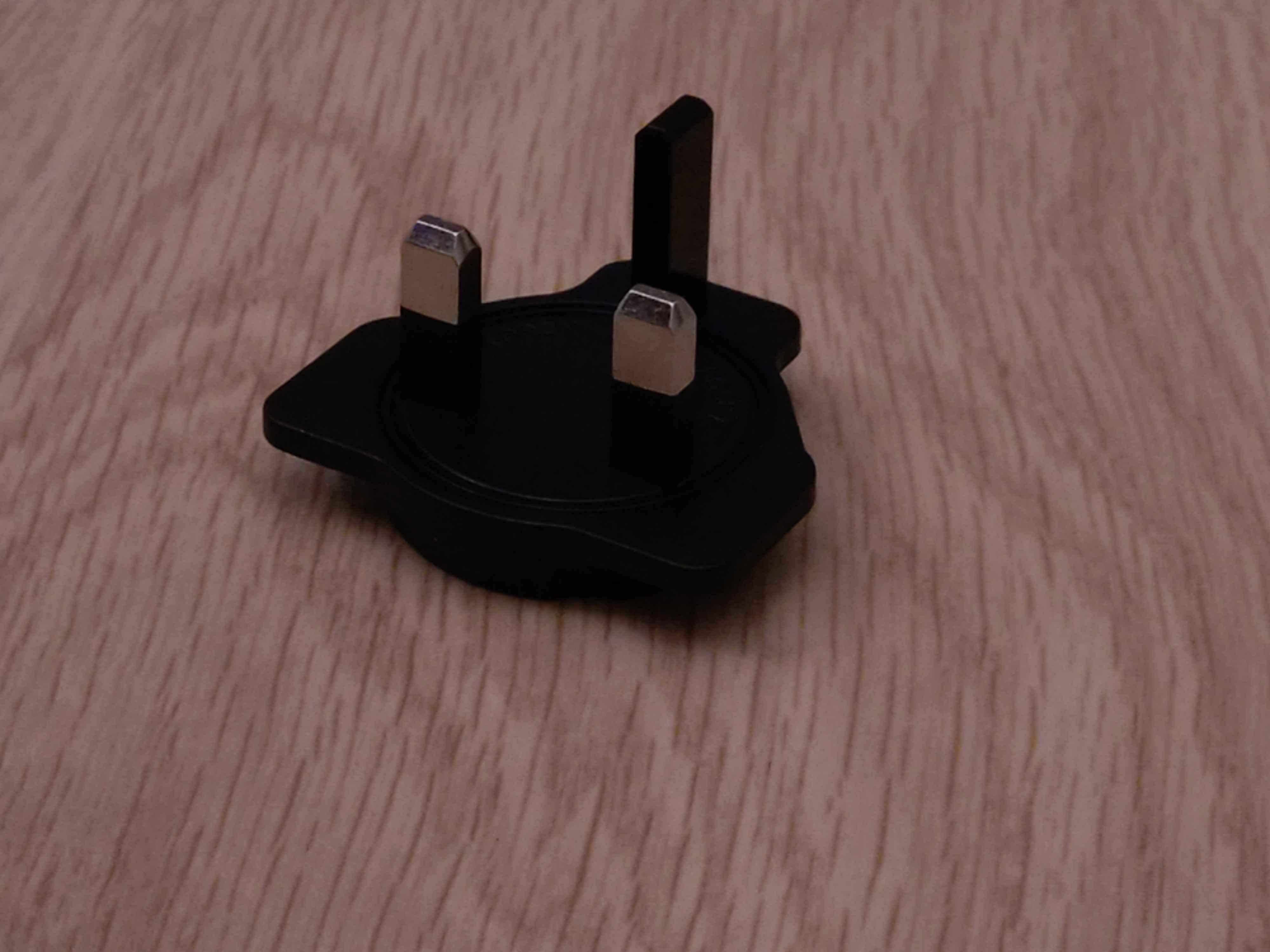
People who joke about legos haven’t stepped on this bad boy
You must log in or # to comment.
Best plug+receptor design in the world for electrical safety.
Worst plug design in the world for bottom of foot safety.
Sounds like the problem is people leaving plugs lying on the ground? Otherwise known as user error.
Or what they called it: Skill Issue.
Also best for staying in sockets but not getting stuck
You sound like ElectroBOOM.
Australia’s is way better lmao
AS/NZS 3112
Simply the best
I won’t go that far
There’s no UK standard for three-phase and high amperage sockets or plugs. In fact, UK sockets don’t support 16A three-phase at all, so if you have higher power needs (for example for EV charging) you’re left with having to install a dedicated wall box that uses an entirely different connector than the 3-pin UK plug, BS 1363.
Given this incompatibility, how can you argue that UK sockets are better, for instance, than SN 441011?
To say nothing of how comically giant every appliance plug needs to be, regardless of how low its wattage is?
I did notably just say that the plug is the best in the world for electrical safety. I’ve made no claims of it’s usefulness or convenience outside of that.
(( am also unaware of any country on the planet that uses the same plug/connector for general purpose household devices and 3 phase power. The number you provided, SN441011, also just leads to relatively generic household plug that doesn’t seem fit suited for multi phase use either, so not sure what you’re trying to say. I’ve also rarely seen places outside of industrial environments that have multiphase outlets, except in America, which has split phase power, and uses the voltage boost by going phase to phase instead of phase to ground. There’ll you’ll do often find 240V split phase outlets for high power appliances like shop heaters, electric clothes driers or EVSE, but those outlets also require unique receptacles and plugs))
E: I believe I misunderstood exactly what you meant. You’re complaining that UK electric code has nonstandard for a high power plug+socket combination. For one, that though has nothing at all to do with this plug. A lack of standard for a completely different plug has nothing to do with the quality of the plug at hand.
Also, there actually IS a standard, that is specifically adopted for EVSE in the UK. You can have a dedicated 400V three phase 32A circuit installed in your garage, and terminate in a red IEC 60309.
It’s not that the standard doesn’t exist, it’s just the UK has a very very heavy preference for simply hard wiring high power and multiphase appliances.
To say nothing of how comically giant every appliance plug needs to be, regardless of how low its wattage is?
It’s a minor nuisance yeah sure, but it also has the nice advantage that there’s no need to fully mould plastic around it. UK plugs are pretty much universally openable, meaning you can repair them yourself if a fuse dies, or one of the wires comes lose. It’s also really easy, and literally all you need is a single screw driver, to swap a working plug over onto a cable who’s plug has broken.
But even so, it’s again not a safety issue so not exactly relevant to my poing.
By this logic, a potato is the best in terms of electrical safety. That’s of course tongue in cheek, but if we’re reducing plug capabilities in the interest of calling them safe, USB-A 1.0 is the “safest” because it only outputs 5V at 3A.
I’m sure I don’t need to point out how the plug is part of a broader electrical system and forms an integral part of it. Excusing the plug from an entire host of applications by stating that a different standard solves for that is the very point of my comment.
SN441011 is the Swiss system that through its 2-, 3- and 5-pin design supports single- and three-phase for up to 11 kW in domestic applications.
As an aide, regarding fuses in UK plugs: Putting the onus of electrical safety on the user for home repairs with a screwdriver is, in my opinion, inherently unsafe, especially when there’s no safe backup through a circuit breaker. Imagine an impatient user replaces a burnt fuse with a piece of aluminum foil.
By this logic, a potato is the best in terms of electrical safety. That’s of course tongue in cheek, but if we’re reducing plug capabilities in the interest of calling them safe, USB-A 1.0 is the “safest” because it only outputs 5V at 3A.
I’m concerned that you thought that was legitimately some kind of good point you made there. The fact that we’re talking about a household plug and socket is blindingly obvious from context.
SN441011 is the Swiss system that through its 2-, 3- and 5-pin design supports single- and three-phase for up to 11 kW in domestic applications.
I have literally never in my life thought for even a millisecond “hey wouldn’t be useful if I could plug my regular appliances into a high power outlet too ?”
How many multiphase and high power outlets do you people have that needing to be forward compatible with regular single phase household plugs is relevant ?
There’s like maybe 2 or 3 devices in a home that even need multiphase high power outlets, like ovens+ranges, electric driers or water heaters or EVSE. And none of those tend to move around much.
Also, again, as I literally stated in in comment of above, that is a matter of convenience , not safety, so it’s an irrelevant point.
Putting the onus of electrical safety on the user for repairs with a screwdriver is, in my opinion, inherently unsafe, especially when there’s no safe backup through a circuit breaker. Imagine an impatient user replaces a burnt fuse with a piece of aluminum foil.
What if someone does that to a car fuse ? What if someone does it one of those old circuit fuses that you still get in old buildings without breakers ?
Or imagine an impatient home owner duck tapes their breaker/GFCI to “ON” because they can’t be arsed to find the fault that makes it trip every 20 seconds.
Idiots ignoring obvious safety instructions will make most ANY system unsafe. It’s not like replaying a fuse is a hard or dangerous process. Most plugs allow you to just clip out the fuse holder with anything small and pointy, swap it with an equal, and then pop it back in. It’s not like we’re expecting people to do rocket surgery here.
Thank you for your concern, but the comment was, as I said, tongue in cheek.
I’m confused about why you’re being so hostile. My only intention is to understand the rationale behind labeling the UK plug as the safest. We’ve already identified that the manner of how it fits into a wider, modern domestic setting is antiquated and other standards and plugs need to fit this purpose. You for example called out IEC 60309 for EVSE, SN441011 for household appliances, and the risks that plug fuses introduce through the nature of them needing to be repaired by an unskilled layperson with analogies to similarly unsafe practices.
If other plugs provide safe alternatives for the issues I’ve reiterated, shouldn’t we be looking at those plugs as safer alternatives?
UK sockets usually have switches on them. There’s no need to unplug things when you’re not using them.
Also, Lego is a collective noun. Saying legos is exactly like saying sheeps.
I think the switches are nice but in the modern world you really don’t need to unplug a vast majority of things. Even my $30 120V USA space heater shuts itself off if it tips over or gets too hot. My cell phone charger pulls functionally 0W while idling.
Boy I bet youre fun at parties
The ladies flock to me for my witty pedantic corrections.
But what about when you need to plug your hair dryer in and need to remove a lamps plug and it ends up on the floor and then you get a knock at the door and its your friend and you go out and forget all about it until you get home and completely fuck your own feet
Why not drop the plug at the wall instead of in the middle of the floor where you walk, or get a multisocket? £3.99 at Argos for a little one.
All these questions and more will be asked on the floor, clutching ones foot
Thanks for the chuckle.
They do some things right in the UK. But does every toilet need to be hidden in a basement labyrinth?
Oh yes, definitely. Otherwise the Minotaur might escape and frighten the other railway station users when he should be enforcing the unwritten rules of the urinal.
this is something I’ve heard a lot from people in the UK, do UK electronics not have switches on them or something? all electronics I’ve ever seen living in the US have a power switch on them, do you think we unplug our stuff to turn them off?
I didn’t know you people had only one of them.
I have:
- A switch on my appliance
- A switch on each socket of my extension board
- A switch on the wall
- An MCB connected to groups of sockets
- An MCB for the whole house
- A circuit breaker on the nearby distribution station
- A circuit breaker in the power plant
- A generator start/stop system in the power plant
All the switches. All the joy. No need for plugs left on the floor.
Lots of devices have status lights and other circuutry that still gets powered when “off”. Its not a huge difference, but its nice to skip the unnecessary draw.
No, but my point was that there’s no need to unplug something and leave the plug on the floor if there’s a switch.
Which makes it extra amusing to me that they coat the pins or whatever with plastic so you cant accidentally touch live while inserting it.
it’s sheeple.
If you look at the picture, that’s clearly the front part of a plug without the back cover, disconnected from all wiring and kept on the ground, with the pins facing upwards, to pierce some fascia.
If someone were to insert that plug into a socket as-is, it would still be a death trap as long as the power switch is on.
Lego vs Legos appears to be another North America vs The rest of the English speaking world thing. A collective noun feels weird to my American ears since they are individual pieces that are countable. It’s not a big deal though. I enjoy having different ways of talking.
they are individual pieces that are countable
So are sheep.
The word “lego” doesn’t originate from before the 15th century—in fact Legos themselves don’t go nearly that far back—so the common rules for modern English grammar apply.
Lego is Danish. They are lego bricks or lego blocks or lego pieces or just lego. Not legos.
I think you mean sheeps.
Are you my older sister? She does this to me too.
No. Definitely not. But maybe. But most certainly probably no.
Eh, well, in your profile pic you look a lot balder, beardier and purple than she does in her Instagram posts, but it could just be bad lighting I suppose.
What a weird sex toy, what shapes are British anuses?!

Boris Johnson is practically leftist compared to Trump.
Not sure why that’s relevant. His political position Vs Trump isn’t exclusively what makes him an ass, but Boris managed to achieve Brexit levels of damage to the UK.
30,000 or so unnecessary deaths because he delayed lockdown.
Partied breaking his own rules while the Queen mourned her husband in isolation, not allowed to have anyone sat next to her at the funeral.
Like trump, a born liar and bulshitter.
Boris managed to achieve Brexit levels of damage to the UK.
Last time I checked history, there was a referendum and the British voters insisted on brexit.
I see you have never encountered a goat head.

Yo, what’s wrong with your goats?
The caltrop family? Really?
Chicken or egg?!
I don’t really fancy standing on either.
Oh look that’s something ninjas spread on the road when they run.
I’ve always heard them called sand spurs, and they’re the devil. Nothing in nature needs to be that sharp, ffs.
At least chestnuts have the decency to be really localized and large, despite being spikey balls of evil. These little fuckers are miniature, everywhere, and can hide in carpet for a solid six months before you notice them the one time you decide to go barefoot.
I’m so glad we don’t have these where I live.
I think you’re thinking of sandburs. Which I’m pretty sure are different, but also fucking nasty plants. They end up in our poor dogs’ paws late summer/early fall. If I could eliminate any plant. That one.
Lovely, I’m glad there’s more than one of these hellplants.
i have lost two tires to goatsheads in the last month and i hate it
I’m glad they’ve never managed to puncture my sneakers while hiking, because god knows I’ve had enough embedded in my soles when I check.
I have lost many bike tires to these guys over the years.
Do you just casually have those lying around your house? What about sharp glass? Or acid pools? Or tigers?
They come into the house on your clothes, your shoes, my dog’s fur. Yes they end up lying around the house. The number of times I have stepped on one barefoot in the middle of the night is far too high.
But why do you leave power cords lying around?
Keeps me on my toes.
And off of them if you fuck up, I’d imagine.
You just brought back memories of my siblings and I walking around outside barefoot to the point these things penetrated our shoes more easily than our feet.
In rural southern Utah these things are literally everywhere. If you go out with cheap foam flip-flops, the entire bottom of the shoe will embedded with dozens of these seconds after you start walking around lol
Kind of oddly satisfying to pull them out of the soles of shoes tbf
You clearly haven’t stepped on a IC chip
100 pins right in the foot
I have, but it was a foot-safe surface mount package
Yeah, but now you can calculate pi to 2000 decimal places.
No proprietary stuff inside my foot, please.
Give me an Open Source RISC V chip and I’ll step on it.
I’ve seen a few videos on these and the benifits of european plug design. My only gripe with it is the size. I know it would be a pain because everything is already built for the the current standard, but an updated “micro” plug would be a lot better.
In fact, why doesn’t the whole world collaborate on a new plug design that takes the best from both and combines into a 110/220 auto sensing plug. Sadly i don’t see that happening any time soon. It’s much more likely that USB-C continues to gain ground and becomes the defacto DC power standard for consumers.
I knew immediately what I was going to see when opening the link haha
Fun fact, the only reason North America can get away with our dinky plugs and sockets is because we only run 120V (typically). Anything here that’s 240V will have a much beefier plug and socket, more similar to the UK plugs. Heres a 240V/30A and a 240V/50A. These don’t bother with the coated pins because it would typically be plugged in once behind a big appliance and never touched again.

Conductor size is about current, not voltage, so I would expect 120V plugs to be bigger as they need to be rated yo 20A to be as useful as typical 240V/10A plugs.
Australia/NZ style plugs are much smaller than (and IMO superior to) the UK plugs despite both being 240V/10A
Is it normal for there to be no cord attached to these? That would stop them from facing this way on the floor
No, the cable comes out perpendicular to the pins (ie parallel to the wall).
Which pretty much guarantees foot-pain orientationThe type G was designed when things were designed to do their jobs. Any pain inflicted by user error was considered a learning opportunity.
The cord coming out the bottom means the plug can’t pull out. Combined with the big, chunky plug and pins, means the cable will likely fail first if pulled. It will also fail at the live core first, leaving a safe plug in the wall.
But yes, the foot pain is… impressive. It’s just blunt enough to not generally penetrate the skin, but it can happen.
Is this another safety factor, i.e. you can’t easily rip appliances out by accident?
It’s so the live wire disconnects first if you pull the cable out - it’s the shortest, then neutral, then ground. Whoever designed this really thought of everything.
Everything except my foot
Don’t unplug them, use the socket switch, and don’t leave them where you might walk if you do.
Few things make me proud to be British, but the ingenious design of our plug sockets is one of them. TBF though we do need those safety features. Mains power here is 240v as opposed to 120v like a lot of countries. One mistake with a live wire would be the last one you’d ever make.
The majority of Europe survives.
Although their sockets are recessed.Europe uses 16A household circuits. UK uses 30A. It would be unsafe to use a European appliance on a UK circuit with an unfused plug.
I thought that’s achieved by the different wiring lengths inside and the blue wire having to loop up and round to go into the top of the neutral leg.
I doubt it.
Tripping over a cable is as likely to damage the socket as it is to rip the cable out of the plug.
Any appliance that increases risk by being unplugged should probably not be using a consumer connection…I think the 3 pin layout caused a lot of headaches, and the integrated fuse required a user-servicable plug.
So it would have to be a split-shell design of some type, where the appliance cable would have to be cable-gripped to the same part as the plug/socket pins.
Thus, a bottom-entry (heh) cable grip and a removable back plate that can only be unscrewed when it’s unplugged.
This was all in a time of bakelite. Plastic wasn’t flexible.But no, I think tripping over an early bakelite g-type (I think it’s officially a g-type) plug cable would likely shatter the plug and pull the pins out of the socket… If it didn’t also damage the socket.
Far more likely to move the appliance than damage the plug. I’ve got a couple of spare old bakelite plugs in my garage, and that shit is strong.
That’s from a power brick that came with attachments for different regions.
I’ve handled normal plugs as well and they tend to orient themselves prongs up too.
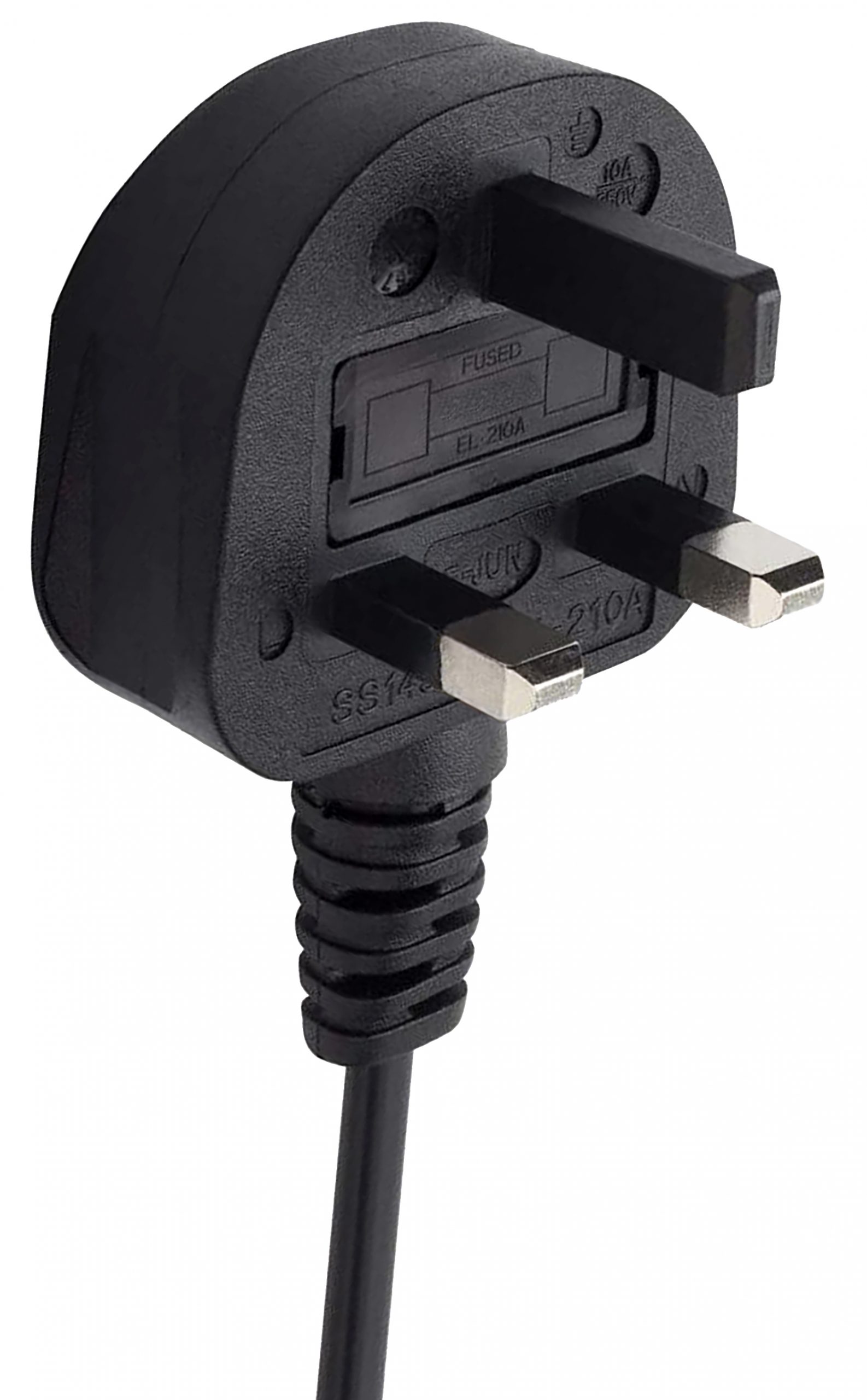
in the UK we don’t need conceal carry, those plugs are easily available everywhere and can be used as a Morningstar
American here. I may be in the minority, but I think this plug design is absolutely stupid. I get that it has safety features, that you can put a fuse in the plug, that the outlets have switches, etc etc etc. But it is absolutely fucking huge. Ridiculously huge. And anywhere that you have multiple devices you want to plug in, it is totally impractical because it is so fucking huge.
The fact is, very very few devices need 240v 13A. Yes I get that it is useful to have this ridiculous amount of power so you can boil your tea kettle in 35 seconds, but other than that very few household appliances need anywhere near that amount of power.
So the result is a cell phone charger, which at the very outside is pulling 20 or 30 watts, is plugged into this giant ridiculous monstrosity capable of supplying 3000+ watts. And in reality the only appliances that use anywhere near that much are cooking appliances and space heaters.
Meanwhile the US NEMA 5-15 is good for 1800 watts, plenty to run almost every household appliance, with the longer ground pin and an appropriate outlet it supports tamper resistance shutters, the thin flat pins resist the insertion of foreign objects into the outlet, and you can fit many outlets in a small space.
And it doesn’t destroy your foot when you step on it, as a nice bonus.AS/NZS 3112
I can charge my electric car from a standard outlet. Can add 20kWh overnight, which is plenty for 3 days round town driving.
230V at 15A on a standard outlet, plug only slightly larger than the American one.
Okay but that’s more talking about the benefit of a 240v system. The question here was the benefit of the giant UK plug. Personally I would argue that 240v to every receptacle is not a major benefit, because very few devices require 3kw+. And in exchange you get a somewhat more hazardous system.
I am curious if homeowners in NZ are allowed to work on their own wiring? Here in the US you are…We used to be. The rules changed about 10 years ago.
A lot of big appliances require higher power. Dishwashers, clothes dryers, fridges.
Some powers tools, drill press, plainer.
I never worry about load splitting,.
The benefit of the AS/NSZ plug, is that it isn’t much bigger than the US plug, but has a higher power density.
We used to be. The rules changed about 10 years ago.
I’d rather have 120v wiring I can do myself than 240v wiring that I have to pay someone $hundreds just to replace a light switch.
A lot of big appliances require higher power. Dishwashers, clothes dryers, fridges.
Here in US dishwashers and fridges run on <1500w. A fridge should only use a few hundred watts tops unless it’s horribly inefficient. A dishwasher needs power for the heating element but ours do okay on 1500w, although yours probably heat up faster. We use a different plug for clothes dryers, usually a NEMA 10-30 or NEMA 14-30 (30A at 240v), sometimes NEMA 14-50 (50A at 240v) for really big stuff like EV chargers.
Our power is split phase (two 120v legs, 180° out of phase, so either phase against neutral/ground is 120v, phase A against phase B is 240v). So with those plugs you either get both legs and ground or both legs plus neutral plus ground.Some powers tools, drill press, plainer
Almost all US power tools run on 120v 15A.
There’s a few really big ones, mostly designed for professional shops, that need some flavor of 240v, usually with a NEMA 6-15 outlet (like normal US outlet but pins are horizontal rather than vertical). These outlets are uncommon outside of wood shops.I never worry about load splitting,.
The only time I’ve ever even considered this is a. charging my Tesla on 120v, or b. running a space heater and a hair dryer at the same time in the bathroom. :)
Bottom line- yeah NZ system has higher power density but I don’t think the benefits outweigh the loss of ability to work on it yourself.
I would be mildly annoyed at 110v in easy reach with metal with out an isolation switch.
Having switched outlets wouldn’t make US plugs any safer, at least not in any meaningful way.
The individual switches on UK outlets don’t really add significantly to safety, they’re mostly just a convenience feature, because for an electrical plug/outlet to even be considered safe in the first place, it has to be always safe, whether it’s powered or not. You can’t rely on people switching off unused outlets instead of doing actual safety design.
The main factors that make US plugs less safe than UK ones is the potential for exposed metal contacts with a closed connection to the outlet, the lack of internal fuse and the lack of polarisation, and, particularly in combination with the first point, the comparatively weak grip strength and protruding design that make it easy for a plug to become (partially) unplugged by accident.
One feature of UK plugs I really like is the built in warding of the live/neutral slots. The ground prong is longer to allow for the mechanism to unlock the hot slot when inserted. It’s essentially a built in childproofing.
Jup, that’s a really good feature. You can get aftermarket child shutters for EU style plugs as well, but they require you to twist the plug before inserting, making them kinda inconvenient, and they have to be specifically installed by parents. Though I don’t think that’s the worst thing in the world. After all, we don’t make any of our other products or home designs toddler safe by default. It’s generally regarded as the parents responsibility to ensure their home is child proof before they get a child.
But the UK version of just having it in every outlet as a hidden feature that you wouldn’t even notice if you don’t know it’s there is definitely the best approach.
(Though it does make low form factor UK plugs almost impossible, because every plug must have a ground prong, even if there’s no actual safety need to have one)
Perhaps it could be revised by adding two unearthed Europlug round-pin sockets below the broad pins, though within a recess shaped like the thin European plugs to prevent the connection of earthed plugs, and declaring Europlug to be a British standard for unearthed mains, for use with devices not requiring earthing. Not sure if the geometry would work out, though.
It’s possible to that of course, but I doubt it’s worth it. It also couldn’t be adapted as is, because fuses in each plug are always required t for UK plugs, they aren’t for EU plugs. And if you have to adapt a narrow EU plug to hold a replacable fuse would eat into size savings, require adapting the standard and require entirely new production lines for the modified plugs, so almost certainly simply not worth it.
Yeah, I think brits and other europeans can generally agree on american plugs

So how does it work in the US then? Is there a law that everything needs to be isolated very well, no metal shells allowed or people just getting electrocuted from time to time
:) only the strong survive.
An actual answer: you very quickly learn to pull in a way that prevents your fingers from slipping onto the prongs, or you just pull the cord to remove things from outlets. That creates its own long term problems, but most people don’t really give a shit because the US is built off cheap plastic shit that you simply replace when it breaks.
That being said, I’ve received like 5 or 6 good hits of the 110v wake up due to the eccentricities of the US plug. It hurts like a bitch, but probably won’t kill you if you don’t have a pace maker and aren’t grabbing something grounded with the other hand.
We also only use GFCI in the bathroom and kitchen and don’t use RCD breakers. It’s honestly astonishing that the US electrical system doesn’t kill more people.
just pull the cord to remove things from outlets.
For those playing along at home: please do not do this.
An actual answer: you very quickly learn to pull in a way that prevents your fingers from slipping onto the prongs
…Do you, though? Because this thread is the first time I’ve considered this as a problem- which I agree it could be better designed in general but especially for child safety purposes- and I’ve been around American plugs my entire life. I’ve never been shocked, unless we’re counting the time I grabbed an electric fence because I was an idiot teenager being goaded by other idiot teenagers.
You just… grab the plug by the plug part? It doesn’t really require any kind of special technique to not touch the metal bits. Maybe I just have big hands? Realistically, I probably couldn’t fit between the wall and the plug while it was still inserted enough to be live.
I also have big hands, but some plug designs are so low profile that if they are plugged into a particularly tight receptacle, you can’t get good leverage to remove them. You get the plug partially out, then try to reposition your grip to pull it the rest of the way or you grab it too far forward and your fingers slip while squeezing, and BAM, zapped.
Power strips are the biggest culprit for this one, since your fingers can end up on the seam between cord and strip and more easily slip under when unplugging.
They are referencing the lack of isolation on the prongs for US plugs. If a US plug isn’t fully inserted, it’s possible for both of the two prongs to form electrical connections with the outlet, whilst not yet being fully inserted.
This means a small part of the prongs which are now at 110V potential to each other is exposed, and could potentially be touched by a child, or cause a short circuit if an object gets into the gap.
So yeah, the electrical code in the US for household plugs is just straight unsafe.
You can see the way to do it properly in this post: Notice how the two L+N prongs only have exposed metal at the very tip, this, if they’re inserted deep enough to create contact, it’s not possible for any exposed metal to still protrude from the outlet.
Never considered that Europeans don’t know the wonderful sensation of 110v. It can vary from a slight tingle (it’s not even tingle, but I can’t describe it) to a “holy shit” moment that throws you back, depending on how and where you touched it and how much current flows. The great thing about A/C is the cycle, unlike a DC current which can lock your muscles and keep you from letting go.
I’ve taken a 240VAC hit a few times. That will definitely wake you up.
Interestingly, the only times it has happened have been when I’ve been abusing the wiring. Never via a plug etc.
It needs an unearthed version without the shutter-opening pin, for things like low-power electronic devices with figure-8 mains sockets, phone chargers and such.
Of course, some BS1363-stan will inevitably show up to argue that as this is a crucial safety feature, unearthed connections should be illegal, much like the Australians who argue that bike helmets should be mandatory in Amsterdam.
we like our plug sockets to be able to take more weight than a sheet of paper
brit in the US- it is astounding to me that sometimes a plug can just fall out of the wall on its own
also leaving exposed live contacts
What, really?
Yeah, it’s not meant to happen (obvi) but especially if it has wear/high usage it can.