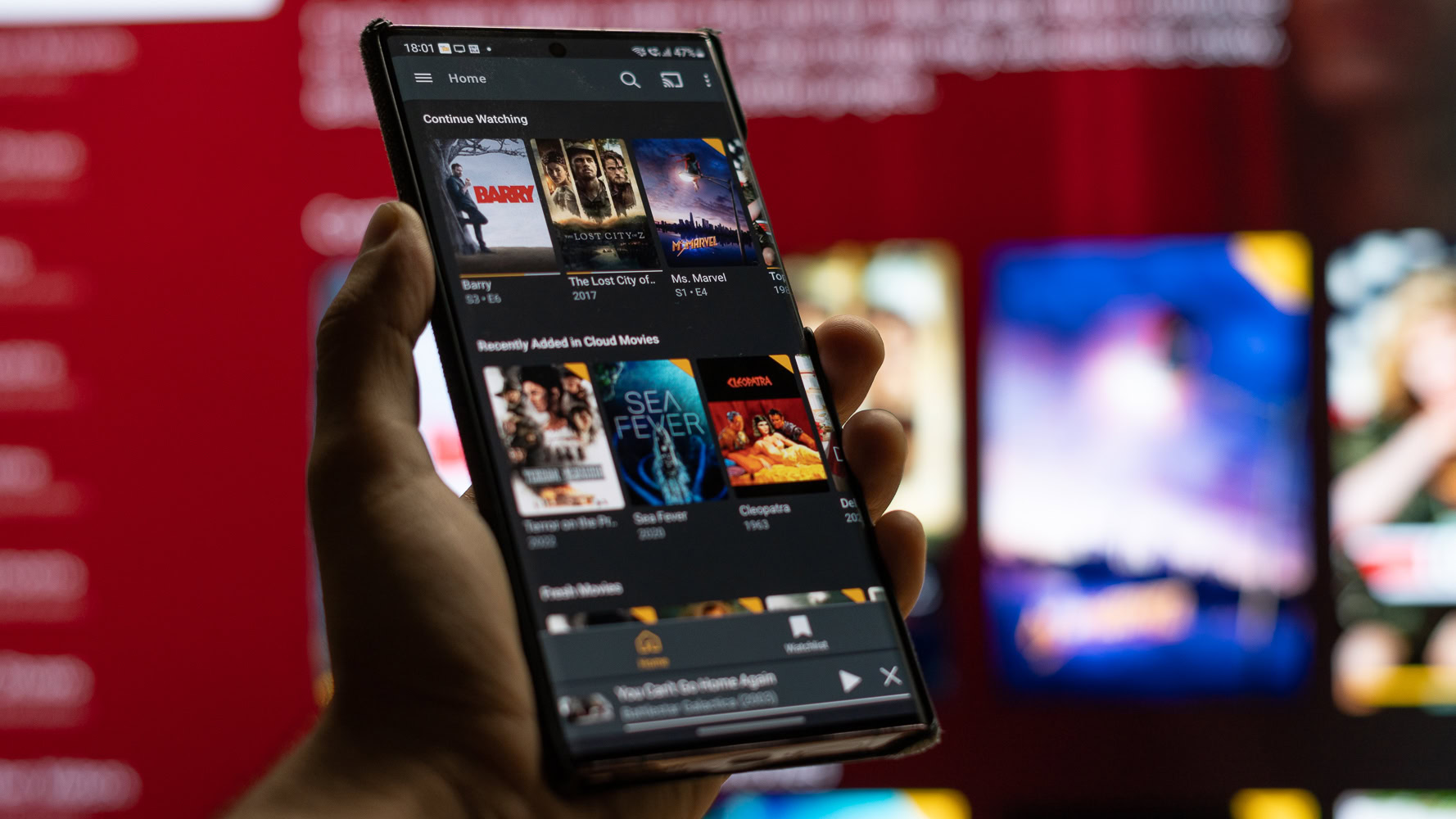
One reason: It’s not FOSS, and because of that, the Capitalist profit motive will always push the creators/owners towards enshitification.
The same forces act upon FOSS too, but the difference is that FOSS has structural immunity built into it. If the software enshitifies, it can be forked and maintained by a community that values software freedom.
We’ve seen it happen time and again. Terraform, CentOS, RHEL, The Xen Hypervisor, etc. When companies try to take freedom away from FOSS, they fail, because their users and maintainers are empowered by FOSS licenses (especially restrictive ones like the GPL) and can fight back.
With proprietary software, the users are powerless, only the owners have control.
Don’t trust promises, good intentions, or corporate slogans. Trust free software and the open ecosystems they thrive in.
PS, Jellyfin is amazing ❤️
I just need Jellyfin to fix their subtitles issues on Apple TV and I’ll be all set. Swiftfin needs some work yet, though I’m told the fix is in the pipeline for release soon^™ (probably by Q1 next year?).
I’m going to call it like I saw it, a very long time ago.
<rant>
You have a product that is basically purpose built to make data hoarding and piracy practical, yet it requires a login with a central service. I don’t care what justification anyone thinks makes that worthwhile or even a good compromise. Signaling to any corporate entity that you’re in possession of such a thing is a bad idea to begin with. They shouldn’t even know you exist. That information, along with anything else you do with the product is compromising to you and can be sold for money if aggregated with everyone else’s data.
If you find this rant out of place in our modern world, I’d like to point to the concept of shifting baselines. This didn’t used to be normal and nothing short of greed continues the behavior. The technology before this ran/runs without anyone knowing. Consider VLC, or XBMC.
Jellyfin is a complete replacement for Plex
Jellyfin is great :D
Does jellyfin have an easy way for remote streaming? I have a couple dozen people on my Plex server, most not very tech savvy, so setting up tailscale and running remote that way isn’t an option. I have a Plex pass so I haven’t been screwed by Plex yet, so I’m not rushing to get out, but I could see myself running both.
Yes-ish, it’s harder for you than the users. But you will have to secure a URL and they will have to remember that URL. Also there’s some security issues with some unsecured endpoints on Jellyfin. That said I have mine out there exposed to the net and am comfortable enough with it.
I already have to expose my Plex Media Server with a Tailscsle funnel (for IPv4 only) for IPv6 I use my Synology NAS reverse proxy which can be accessed globally.
I have been maining this setup for years now that I forgot if I can access my PMS outside without either those solutions lol (I am GGNATED but IPv6 works fine as stated).
The main thing here is that I don’t need my users to do anything, they just open the app and access it, no need to remember IPs/URLs or install VPNs to my server… Is that possible with Jellyfin as well?
Yes you can do the same thing for Jellyfin. I use Synology ddns and setup subdomain in reverse proxy to jellyfin port. For tailscale, I previously use this but needs to add the jellyfin port after the tailscale IP.
No, there’s not centralized host server to connect your users with your server. They need a fixed IP or URL to access your server from outside your network.
So how do they access from, let’s say a Smart TV/Android TV device?
Jellyfin apps ask you for three things in order to login: URL, username, password.
You could just get a domain and set up a reverse proxy. Or use Cloudflare tunnels.
All possible, but currently I have lifetime Plex pass and just need to share with people I want to share with. No extra config. Once Jellyfin can do that or something similar, I’ll look at jumping ship. Until then, the juice isn’t worth the squeeze.
Fair enough. I doubt Jellyfin will ever offer something like that. Its designed to be completely self hosted and not rely on a central server, which I dont see changing.
Once Jellyfin can do that or something similar
Once Jellyfin does that then it’ll be time to look at jumping ship to something else, because that’ll be the indication that Jellyfin is going down the same road as Plex.
no, tailscale is still the easiest option.
So I don’t get it, I have mine up with a domain without tsilscale… The clients are quite happy wherever. I don’t even see that much “crawling” traffic that goes to the domain, most just hit the server by ip and get a static 401 page that the “default” site is hard coded to give out.
At some point, somewhere on the internet, someone authoritatively claimed that tailscale is the one and only acceptable solution to getting your jellyfin server outside your LAN and it just kind of took root. nginx has worked perfectly fine for me.
The way you switch between two servers you own is more than inconvenient; it’s what keeps Plex in my life.I wish things would change because everything else is better.
No, it’s not.
Just to think of replacing the mount points in the docker container from Plex to Jellyfin (in order for it to read my Riven and Decypharr symlinks) scares me… Mostly because after I finish a docker project my mind seems to go blank lol.
At least they still kinda honour the Plex Pass lifetime users…
At least they still kinda honour the Plex Pass lifetime users…
for now.
For the love, as a Plex alternative, they don’t even have a native app on all major tv stores. It should be a P1 feature. I would throw money at them if they get Apple TV support. Right now, there are no functional apps running on the latest Apple TV OS.
Swiftfin?
For me the audio is desynced and subtitles are completely broken. :(
Oh weird. I would guess a transcoding issue, maybe double check those settings to make sure you have the right config for your hardware.
Theres also Infuse, its a video player that supports jellyfin, but I think some features are behind a premium purchase.
Yeah. The entire jellyfin support is behind subscription.
Meh, I went into plex settings on the server and just turned off all the bloat. Its all on one page. Not a big deal.
I went into no settings on Jellyfin and everything stayed sane and the same.
whoa, you mean you don’t want ads?? what is happening?!
What about the limits on remote streaming unless you pay?
I purchased a lifetime sub when it was on sale
I never felt comfortable with Plex, glad I’ve got JellyFin.
FYI, they never capitalise like that. It’s always Jellyfin, not JellyFin. They actually have a policy detailing it.
Indeed. Seems every week Plex takes some action to enshitify their service more and more.
Playing devil’s advocate, I understand one point of pressure: Plex doesn’t want to be perceived as a “piracy app.”
See: Kodi. https://kodi.expert/kodi-news/mpaa-warns-increasing-kodi-abuse-poses-greater-video-piracy-risk/
To be blunt, that’s a huge chunk of their userbase. And they run the risk of being legally pounded to dust once that image takes hold.
So how do they avoid that? Add a bunch of other stuff, for plausible deniability. And it seems to have worked, as the anti-piracy gods haven’t singled them out like they have past software projects.
To be clear, I’m not excusing Plex. But I can sympathize.
I wish more people understood this perspective
There is that but it’s primarily that they’ve taken over 40 million dollars of venture capital. They are almost certainly under immense pressure to turn profitable asap and converting lifetime pass users into revenue streams somehow, converting new users into SaaS, etc are going to be things they pursue more aggressively.
Don’t take the devils money if you don’t want the devils stipulations
It’s really nice of them to fight the good fight while I use Jellyfin instead.
Which doesn’t have half the features and crap security compared to Plex/Emby.
The security thing is ironic because my personal Jellyfin server (nor anything else on it) has been hacked, but Plex itself has had their database leaked recently. It’s actually the main reason I switched because I don’t like their auth servers being a giant common target. (Also, technically it theoretically means Plex employees can just let themselves in to people’s private servers)
From their blog post about it:
An unauthorized third party accessed a limited subset of customer data from one of our databases. While we quickly contained the incident, information that was accessed included emails, usernames, securely hashed passwords and authentication data. Any account passwords that may have been accessed were securely hashed, in accordance with best practices, meaning they cannot be read by a third party.
The passwords were hashed and, I’m inferring from their language, salted per-user as well. Assuming a reasonable length password (complexity doesn’t matter much here, what we want is entropy) it would take a conventional (i.e. not quantum) computer tens to hundreds of millions of years to crack one user’s password.
You may (half) joke, but MPAA attention on Jellyfin would suck.
Maybe a dumb question: What exactly could go wrong? Has the MPAA done anything to stifle Kodi?
https://www.comparitech.com/kodi/kodi-piracy-decline/
Based on our research, comparative search volume for “Kodi” has fallen around 85 percent from 2017 to 2022. Google Trends data reveals the dramatic decline started in Q2 of 2017 and has, for the most part, continued that trend up to this point. Consequently, the decline in people searching for Kodi directly relates to the appearance of the coordinated attack against piracy in the form of ACE.
And this is with Kodi furiously distancing itself from pirates at the time.
Attacks don’t have to be direct. Though they absolutely can be, too.
They’ve taken other measures as well. Nobody knows the details besides them, but they blocked an entire cloud provider called Hetzner because too many people were using it for pirate Plex servers. They absolutely have to maintain the image of being legitimate like you said.
Sure, apart from charging for remote access.
That serves the purpose too. It’s harder to pin Plex as an “illegal distribution service” when you have to pay for access. Either the streamer or “distributor” can’t be very anonymous, which makes large scale sharing impractical.
On the other hand, the more money they squeeze out, the more they risk appearing as if they “make money from piracy,” which is exactly how you get the MPAA’s attention.
Plex has been off limits to me for along time. Just the fact they want to require auth with their central service for something I use for reasons rights holders would love to sue me into third world poverty over (muh Linux ISOs) is enough reason.
Them demanding that auth hook into the server makes me uneasy about what sort of metatdata they are currently, or could exfiltrate later on, should they want to or be demanded to.
Whole thing stinks of willingly being part of a honeypot.
Goodness, how am I supposed to store and stream more entertainment than I could watch in a lifetime now?
I hate headlines like this. I’d love to hear the REASONS WHY Plex are doing all of this. But no, it’s just “4 ways in which Plex now sucks” which we all know already.
Before someone says “the reason is money” we need to ask: do the developers of Jellyfin not use money? Why won’t the same thing just happen to them too?
Before someone says “enshittification,” we need to ask: does this mean Jellyfin will soon have the same problems?
We all seem to love Jellyfin so I think we need to understand the actual reason why, or this will just continue happening.
Plex is a private company…
Here you can see, what they do with the momey:
https://opencollective.com/jellyfinPlex took a significant degree of other people’s money, to the tune of over 40 million dollars. The people who gave said money were not kickstarter funders, donators, subscribers, etc but investors, who have an expectation that plex will move the company in a direction that makes them profitable enough to not only repay the 40+ million investment, but to then earn profits for a lengthy period (possibly in perpetuity) as they are stakeholders. This is the same thing that happened to Reddit (though Reddits scale and timeline was FAR more vast), openai, Google, literally every company ever basically. Plex now has an obligation to not just continue development but to continue it in a way that maximizes growth and revenue, even if that is anti consumer.
Jellyfin on the other hand has language on their contributions page that almost discourages financial support. This is because the only financial support they accept is donations, which are clearly explained are to support the free software and give no ownership stake. The software does not generate profit and donation does not equate to any kind of investment, other than supporting continued development. Expecting any kind of return on your part (again, other than the project continuing to move forward) is foolish. Lemmy is similar, as are many other FOSS projects. Jellyfin can remain ideologically stable to its goals, and because it is free if its users feel the lead developers are straying from this they can fork it and make “new ideologically pure jellyfin” (see xmbc to plex to emby to jellyfin, or lemmys 938 forks, many of which are tweaks and some of which are because people got beef with the main devs)
I hate headlines like this. I’d love to hear the REASONS WHY Plex are doing all of this.
- Greed… do you really need 3 more?
Before someone says “the reason is money” we need to ask: do the developers of Jellyfin not use money? Why won’t the same thing just happen to them too?
Plex is a private company wanting money… Jellyfin is a voluteer-drive effort
Before someone says “enshittification,” we need to ask: does this mean Jellyfin will soon have the same problems?
Enshitification happens to privately develop products due to <checks notes> greed… Jellyfin is not a private company pushing a product for profit
We all seem to love Jellyfin so I think we need to understand the actual reason why, or this will just continue happening.
Back to “greed”
plus jellyfin is open source. if they start enshittifying, people can just fork it. That will keep them in line. Look what happened with emby. They’ve been sent to oblivion and no one even talks about them anymore.
As predicted, a one-dimensional answer.
Let’s say they want more money: they do have a healthy software subscriptions business. How can they get more by becoming the world’s tiniest streaming service? And won’t that cannibalize their subscriptions business as the experience gets shittier and shittier?
Some actual “whys” within this would be things like (made up, but for example)
-
the subscriptions business is dying - less than 1% of users ever buy a pass and efforts to increase that failed for (another reason here)
-
streaming services are dumping cash into viewer acquisition because a war is on for dominance in that space and Pled is capitalizing on that
-
Plex has high overlap with gamers and are making good money on midroll gaming ads during these streams
-
Plex has legal concerns about facilitating piracy - this is the real reason why sync is shit and they killed watch together. They are desperately trying to pivot out of their old business before they get sued - OR all this streaming nonsense gives them a kind of fig leaf over that somehow
See, issues can be complex and interesting. Just calling them greedy is neither. How is this the greedy play, even?
-
Clients suck on non plex
You guys are still using plex? I just make it publicly available on a webserver. Access control? Why would I care, I stole it.
Like sftp?? Hope you configured it right
Idk. Maybe you don’t want to spend the bandwidth and power on streaming it to a bunch of randoms.
Wireguard, or even just jellyfin with a password
Stopped using Plex and moved to jellyfin around 12 months ago and have never looked back
I have both but Jellyfin is not good with duplicates. Having several versions of movies in different languages just puts multiple copies of the movies in Jellyfin, with no distinction between them until you click into the details. Plex does this well with “Play version”.
But Plex is worse for other reasons, on my LG TV. It’s painfully slow and doesn’t play the correct audio track that I select.
Haven’t really tried it but they have support for dupes.
You just need to name them correctly (too lazy to link the docs. Just look up versions in media library)That’s what I mean. You have to rename them. Plex handles this automatically, with the same shared library. I wish Jellyfin was better at this.
Jellyfin goes by file name, Plex goes by identified movie/show. Much better.
Welll…They state in their docs how it should be.
If you deviate from it, that’s on you.And yes it’d be nice if they did it automagically but we can’t have everything and I don’t expect it from them honestly as that is really a very niche requirement considering it already works.
An mkv with multiple audio tracks would save you some storage space.
Yes, however sometimes it’s easier to manage language and subtitles in a single file if space is not an issue and you often are wanting a different version. Might also have pre-burned subtitles, for which you’ll need a separate video stream anyway.
Plex does this well with “Play version”.
It does it even better with “editions” support, at least for movies.
Capitalism.
Yeah, only one reason. It’s always capitalism.
Enshitification has entered the chat
If they were going to get enshittified, they should’ve been smarter about it to gradually introduce lock-in. The switching cost of going to Jellyfin is almost zero. Did it in an afternoon about a year ago. Ya done goofed, Plex
The writing was on the wall when they started getting American VC money.
American VC culture is anthenema to truly user focused products.