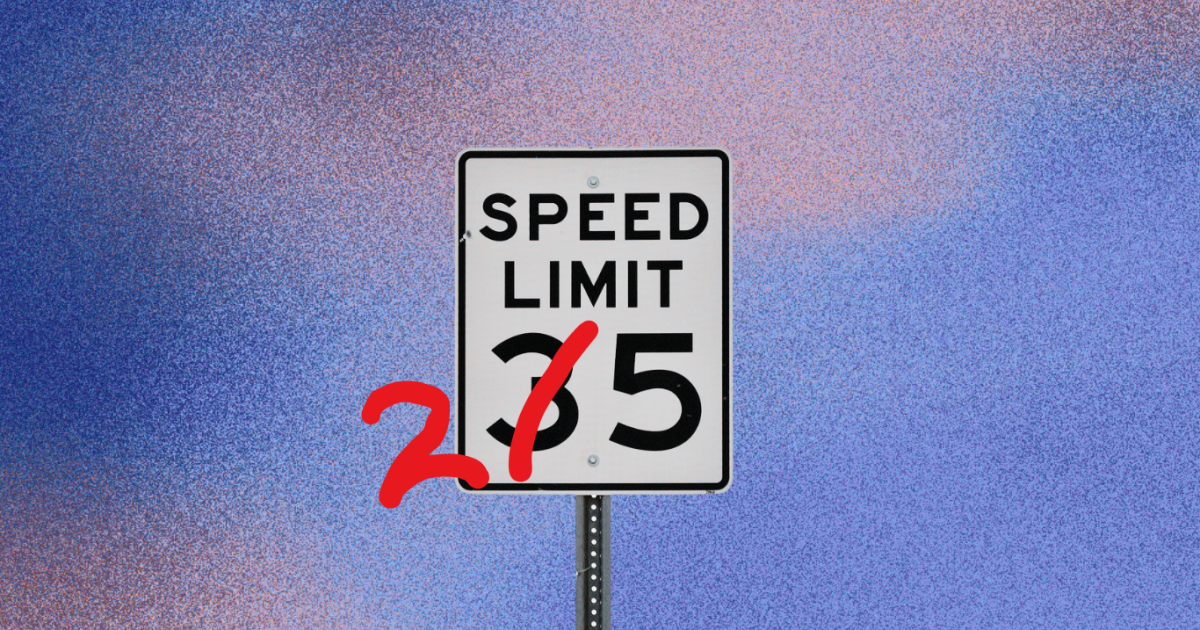
Traffic deaths on stretches of Martin Luther King Jr. Way in Seattle have doubled in the last five-year period, despite the city’s goal to reach zero traffic deaths and serious injuries by 2030.
A KUOW analysis of recent city data shows how a city-wide push to lower speed limits can improve some elements of safety – but experts say there is still work to do when it comes to slowing drivers down and keeping pedestrians safe.
I mean, good to have data that lowering speed limits does actually help. Still would be better to revamp the roads to have a safer design speed.
In the Netherlands there is a trend of lowering speeds but not enough enforcement (something with local governments not having the authority, and national police having different priorities). Not sure if any scientific data but it is empirically clear to both sides that just changing the signs is not enough - if a road feels like a 50kph road, people will continue driving 50kph. If a road is redesigned, people stop doing that.
Slower speeds result into less serious injuries and less fatal accidents, but it seems people are only willing and or able to adhere to lower speeds if the design of the road calls for that safer speed.
Seattle doesn’t really enforce traffic laws except with speed cameras and parking enforcement. Adding speed cameras would get people to start slowing down.
I’d argue it’d help too - but to add about the situation here: the reason the police is not prioritizing this is because they believe so many people would object their fines it would place a heavy burden on our justice system. A judge would have too look at all those individual streets (perhaps times 2, if the situation is different in each direction because of a side road or something). The people objecting would have a point because there are laws preventing government from doing things that are unfair to the individual. In other words, a speed camera on a big road is much more fair than a speed camera in a small street. Weird stuff.
I think going after every person doing a few over is poor use of resources and invites over-policing and bias.
That said, the vroom vroom/street racing crowd- I can’t understand how these assholes in hellcats and chargers get away with blasting all over town. Noise ordinances alone should be hitting these drivers so hard they can’t afford to continue; the speeding is bonkers too. MLK should not be a fucking race track most nights of the week.
Reminds me of Homer Simpson

55? That’s ridiculous. Sure, that’ll save a few lives, but millions will be late!
Solid joke
Nemani said SDOT’s Vision Zero team is currently working on design improvements to MLK Jr. Way north of Judkin’s Park, but no redesigns are in the works for the stretch of road through the Rainier Valley.
“Fuck South Seattle” - Seattle, as usual
I know the area being discussed in this article very well and spend time in it regularly.
As much as I appreciate KUOW’s reporting here, there are some core facets that I always want to see addressed:
- Speed limits vs actual measured traffic speed (which the article covers),
- Rich data on vehicle speed (ie: more than just single-value medians), in aggregate AND on vehicles involved in accidents, and
- Pedestrian behavior
This last one is key. And before I get yelled at for victim blaming, hear me out. I know these streets. Compared to the rest of the city, this corridor of Seattle has multiple residences designed to support substance abuse recovery (featuring in-house medical care and recovery resources). [ PS: DESC rules; all my homies love and donate to DESC. ]
As a result, compared to the rest of the city, there are just more people wandering around in the street in this area, many unemployed (giving them time to be out and about more), without cars, many living with adverse psychological conditions or in various phases of substance abuse suffering or recovery. So it’s not uncommon to see people wandering around, in intersections and in the streets (on foot, scooters and bikes) in wildly varying states of awareness.
What I don’t see in this article, and what I never see in any article about traffic safety in places like this and up north on Aurora Ave, is the inclusion of this population in the overall traffic safety picture. Yes, it’s an uncomfortable topic to navigate, but I think it’s worth the effort. My guess is that the hesitance to mention this is to avoid the public’s knee-jerk reaction to dump blame for traffic safety woes onto an already beleaguered and victimized minority. That sucks, and I don’t want to do that.
So how to do we make these streets less deadly, knowing that we’ve got an everyday higher-than-usual population of folks occasionally staggering around into streets and intersections (without the shitheel “just ship 'em away somewhere” answers)?
I don’t have a good solution for this, but we’re never going to come up with one if we continue to ignore this part of the picture. Slowing down traffic is definitely part of it, but I think coming up with a smart streetscape design that’s aware of this pedestrian challenge and makes some attempt to accommodate for it should be in there as well.
I’m in Chicago and there’s about a mile of my commute that I’m certain has far higher pedestrian injuries than the rest for the same reason you mention. It’s a wide-open street, but I see at least two people every day crossing at random points when the way isn’t clear. The “make the road narrow so people slow down” fix people like to throw about here would likely make it more dangerous because there’d be less visibility.
Other sections have structural issues, but that area is social.
They need carers to supervise them. I’m guessing whoever runs the rehab has too few staff by far. Either intentionally or unintentionally. A lot of carers are getting deported and there’s a shortage for that and other reasons. As with most things, it comes down to the decay of capitalism.
Build roads so people don’t feel like they can go fast without paying attention. People won’t go 70mph on a narrow street alongside a cliff. They’ll gun it down a long straight road.