A large survey of Americans reveals that household income strongly shapes how religious individuals interpret the Bible’s teachings on charity, challenging the long-held idea that faith universally suppresses the desire for systemic economic change.
Sociologists have debated the fundamental nature of religion and its relationship to economic inequality for more than a century. One prominent theory originated with the 19th-century philosopher Karl Marx, who proposed that religion acts as an opiate for the masses. In this view, religious ideas offer a set of comforting illusions that persuade lower-income groups to accept their disadvantaged position.
By framing the current economic system as normal or divinely ordained, religion supposedly drains the motivation to fight for a fairer society. Modern scholars building on this idea argue that religion offers psychological compensators, promising eternal rewards that make present-day inequalities seem less important.
As per usual, Marx is abit more subtle on this idea than the author portrays him as.
The problem is that Marx doesn’t ever describe religion as a ‘comforting set of illusions’. What he calls it is ‘The opiate of the masses, the heart in a heartless world’, which capitalism will inevitably tear away in its dissolution of all things.
Religion is a social process that is, on the whole, according to Marx, an antagonist to capitalism, however, as this article demonstrates, it and the social relations it creates are itself subordinated to the economic relations that it exists in, which means that religion is neither an antidote or vaccine to capitalism, it is a painkiller. To extend the metaphor, because of its nature as a painkiller, it can potentially be a part of how the social revolution comes about, because the social revolution basically requires a major surgery on society, however, the doctor themself cannot be on the same painkillers as their patient when operating.

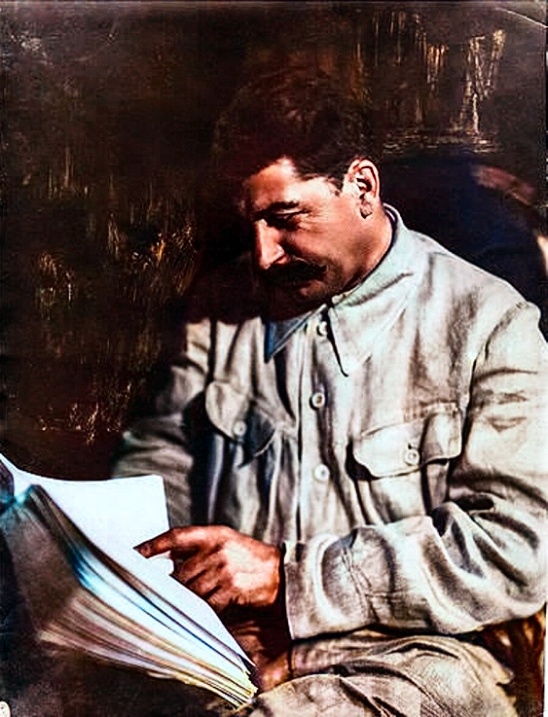

He’s in there:
As per usual, Marx is abit more subtle on this idea than the author portrays him as.
The problem is that Marx doesn’t ever describe religion as a ‘comforting set of illusions’. What he calls it is ‘The opiate of the masses, the heart in a heartless world’, which capitalism will inevitably tear away in its dissolution of all things.
Religion is a social process that is, on the whole, according to Marx, an antagonist to capitalism, however, as this article demonstrates, it and the social relations it creates are itself subordinated to the economic relations that it exists in, which means that religion is neither an antidote or vaccine to capitalism, it is a painkiller. To extend the metaphor, because of its nature as a painkiller, it can potentially be a part of how the social revolution comes about, because the social revolution basically requires a major surgery on society, however, the doctor themself cannot be on the same painkillers as their patient when operating.