

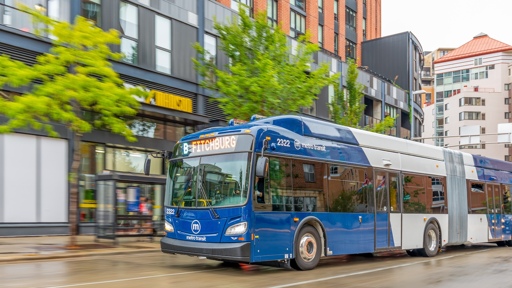
Just a few years ago, electric buses routinely faltered in cold conditions, reinforcing doubts about whether they could replace diesel and natural gas-burning fleets in northern cities. Now, with better batteries and strategically placed chargers, Madison is at the forefront of a small but growing number of cities testing whether those doubts still hold. Making the technology work through a long Midwestern winter could reshape how others approach electrification. Some 3.6 million commuters nationwide rely on buses to get around. With transportation accounting for roughly 28 percent of the nation’s greenhouse gas emissions, transit agencies are looking for alternatives to polluting machinery that creates a particular health risk around bus stops.
Not sure I agree with this. Many of those vehicles don’t even need to exist, so effort is better spent on eliminating them. Buses are among the few vehicles that actually provide public benefits greater than their costs, so it makes sense to invest in new technology to improve them.
And as you alluded to, the air pollution benefits can be substantial.
Which of those vehicles don’t even need to exist?
I think we’re saying the same thing with a different strategy.
Such to say, I’d prioritize eliminating all the non-passenger work vehicle passenger family vehicles than reduce bus fuel emissions. That might mean pumping out more “dirty” busses for an overall net positive in the short term.
Improving or expanding the existing bus systems would be a better use of resources than converting existing systems to green energy.