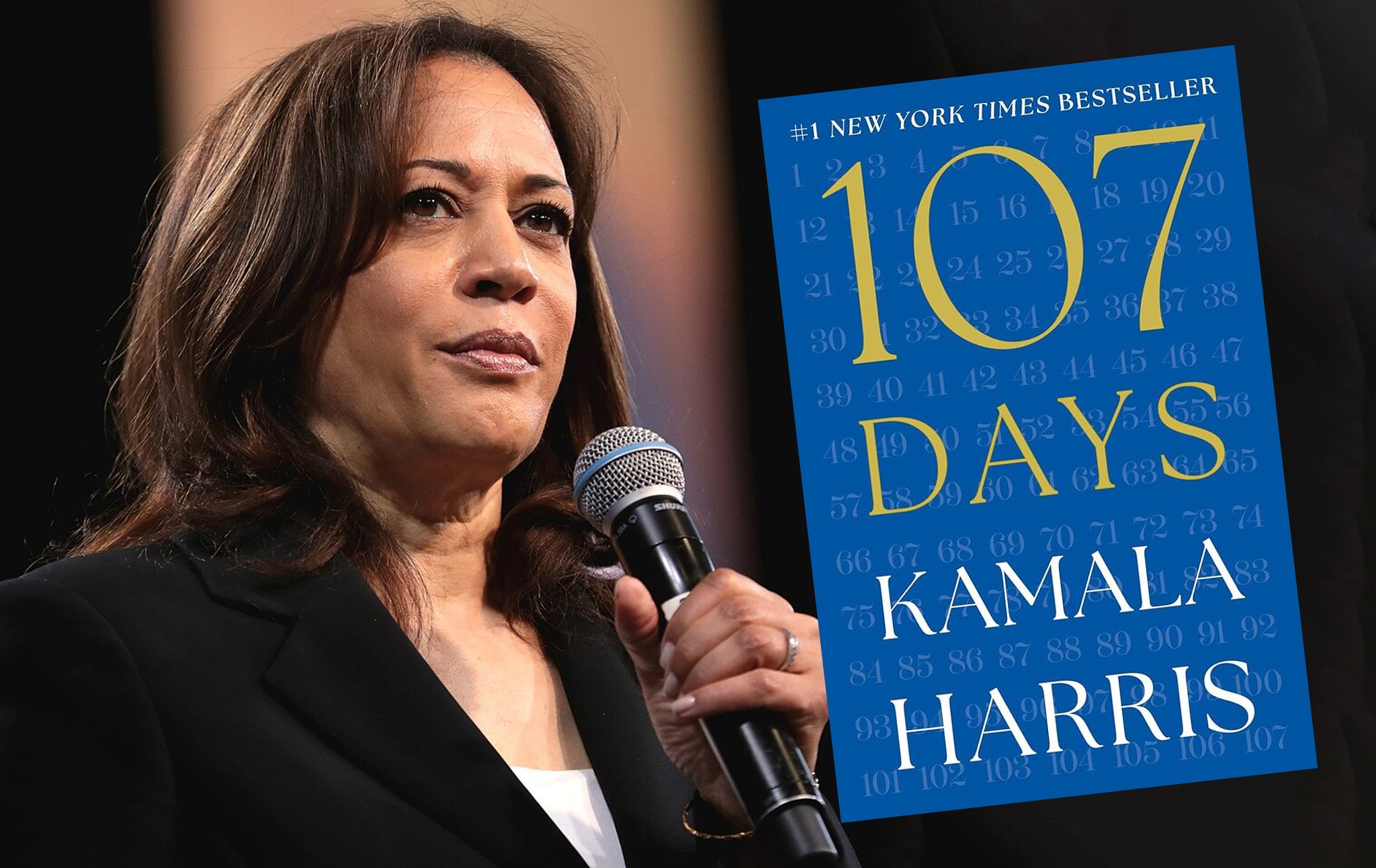
In her new book, Kamala Harris insists she only lost the election because she didn’t have enough time. But she accidentally demonstrates the real reason: she’s a terrible politician.
And in the most superficial terms, the exact kind of framing you are using right now is what was used to hand Trump the election. If not for people doing exactly what you are doing now, we probably could have gotten Harris over the finish line to a W, but for the reasoning you are using right now. And since its been so well studied and is incredible obvious now, we must simply assume that those asking/ following that line were never interested in a Harris W, and that it was always in bad faith.
Not bad faith, I just want to make sure we’re saying what we each think we’re saying. Because I don’t think you’re quite responding to what I’m actually saying, at face value.
I’m not saying she ran a good enough campaign and everyone should have been enthusiastic about her. She absolutely made bad choices by letting the DNC machine make bad choices for her, and I absolutely recognize that those cost her votes and that. I’m not saying the primary process was totally the awesomerest best one we could have possibly hoped for, because it wasn’t. But I think the media coverage of the 4% primary voter turnout for Uncommitted, which surely had an impact on Democratic donors putting pressure on Biden and the party to change course, just serves to validate my belief that if we actually all came out and voted, we’d have a more representative government. Enthusiasm for the Harris/Waltz ticket was sky-fucking high at first and then it was squandered with milquetoast status quo. No argument from me about that.
What I am saying, is that in isolation, come the general election in 2024, voting for Harris was the only action that would have prevented Trump from winning the 2024 general election. I feel like that’s just incontrovertible math. If you’re saying to me, in response, that looking solely at the singular event of the general election in 2024 (not the primary season, or anything that happened on the campaign trail, just the general election itself), that my vote for Harris in the 2024 election helped Trump win the 2024 election, then I think you need to show your math because it sounds truly insane.
But I don’t think that’s what you’re saying. So I’d like a little more clarity on what you’re saying rather than making assumptions and inferences.
Okay, so you are approaching this in good faith, which I appreciate and acknowledge and will invest the time it takes to have this conversation around. But as this is the case, its important to note that this conversation isn’t happening in a vacuum, that I’ve had this conversation or variants of it almost continuously since 2023, and that context informs this current conversation; that they are inseparable.
What I am saying, is that in isolation, come the general election in 2024, voting for Harris was the only action that would have prevented Trump from winning the 2024 general election.
There’s no real point in beating around the bush and this sentence highlights my core criticism; I identify it as a fundamental component to why Harris (and honestly, Hillary before her) lost. You’re effectively making one leg of the argument around strategic voting, or at least a summarized version of it. And that is pretty squarely where my criticism lands. The conclusion of those advocating for strategic voting, or rather, the idea that voters had no other choice, or that the most “rational” choice for voters should be Harris, was well represented and communicated during the campaign. And the problem which, by its on acknowledgement it creates, is that it ignore the fact that voting in a two party system, however much the proponents might resist, is not a binary.
Voters always have another place to go, and this is fundamentally the damage that this advocacy does and the problem it creates, is that it ignore the fact that voters can choose to not participate in-lieu of accepting your framing of what you consider the smarter choice to be. The downstream impact of this is voter disenfranchisement, and that also, campaigns recognize and are paying attention to whats being communicated. They also see and understand your communication that you see this act as being the only “rational” choice and they adjust their actions accordingly.
When political projects recognize your vote as a given, or see themselves as the only “rational” choice in the matter, they understand to themselves that they do not need to earn your vote any longer. And we saw this play out in real life in both 2016 and 2024. Both campaigns recognized the limited suite of choices, and rather than engaging less than likely voters to become engaged, they instead chose to focus on attempting to bring “across-the-aisle” voter to their side. The problems with this are multitudinous and obvious and I don’t think need additional explanation here as others have done better and in greater detail elsewhere.
The problem is that the “strategic voter” cuts against their own cloth; “strategic voting” as an electoral strategy has been demonstrated, over and again, to lose elections. As a voter you should never be communicating to a campaign that “they’ve got your vote” or that “if voters were smarter, they’d have voted Harris”, because in doing so, you do two kinds of damage to that campaign. First, the campaign understand they no longer need to compete for your vote, and what you need to recognize, is that when a campaign is competing for you and your voice that you are using, there are 2-3 additional people they’ll convenience if they recognize that they need to focus on you and meet your need to get your vote. The second kind of damage is that you disenfranchise people when communicating this, that they only have some kinds of choice, when they do know that they actually do have more choices available to them. They can just not vote. And this is the choice Americans made as Harris understood and was communicated to that she didn’t need to “go get” Democrats votes. She thought she could focus on getting Republicans to vote for her, and it utterly failed. And many of us, my self easily one of the most consistent and outspoken voices on this matter, worked to communicate that this strategy would fail months before it ultimately did. And we were met with the consistent repetoir of “Well the only way to stop Trump is for voters to vote for Harris”.
And what this belies is a fundamental misunderstanding of the mechanisms on which politics operates. You can’t just “move voters” to a candidate. But you can move candidates to where voters are. And I say that softly. Obviously, over time, you can convince voters of things, but in the course of a campaign, this is somewhat ridiculous. Campaigns are short and attention spans are shorter. Its far more effective and strategic focus on moving a candidate, rather than an electorate, in the course of a campaign. And you can’t move a candidate if you’ve already acknowledged you’ll vote for them regardless. And strategic voting is effectively an opposing frame work to what I’ve outlined.
A similar conundrum exists in recycling or with climate change. We were propagandized to that your individual action is what needs to change to change the course of things in this that or the other matter. But actually, it doesn’t work. You can’t just ask voters to do better and then expect them to. Like with pollution, you need to focus on where the power is; in industry, at the political agent/ player level. You can change those people and move them to better positions and get better outcomes. But just expecting voters to “do better” according to whatever your recipe for that is, is to cultivate disaster.


Honestly, if you really need it explained to you at this point, I have to assume you are asking this in bad faith.
Go ask @SatansMaggotyCumFart@piefed.world to explain to you how you’ve become the villains of your own narrative.
And in the most superficial terms, the exact kind of framing you are using right now is what was used to hand Trump the election. If not for people doing exactly what you are doing now, we probably could have gotten Harris over the finish line to a W, but for the reasoning you are using right now. And since its been so well studied and is incredible obvious now, we must simply assume that those asking/ following that line were never interested in a Harris W, and that it was always in bad faith.
Not bad faith, I just want to make sure we’re saying what we each think we’re saying. Because I don’t think you’re quite responding to what I’m actually saying, at face value.
I’m not saying she ran a good enough campaign and everyone should have been enthusiastic about her. She absolutely made bad choices by letting the DNC machine make bad choices for her, and I absolutely recognize that those cost her votes and that. I’m not saying the primary process was totally the awesomerest best one we could have possibly hoped for, because it wasn’t. But I think the media coverage of the 4% primary voter turnout for Uncommitted, which surely had an impact on Democratic donors putting pressure on Biden and the party to change course, just serves to validate my belief that if we actually all came out and voted, we’d have a more representative government. Enthusiasm for the Harris/Waltz ticket was sky-fucking high at first and then it was squandered with milquetoast status quo. No argument from me about that.
What I am saying, is that in isolation, come the general election in 2024, voting for Harris was the only action that would have prevented Trump from winning the 2024 general election. I feel like that’s just incontrovertible math. If you’re saying to me, in response, that looking solely at the singular event of the general election in 2024 (not the primary season, or anything that happened on the campaign trail, just the general election itself), that my vote for Harris in the 2024 election helped Trump win the 2024 election, then I think you need to show your math because it sounds truly insane.
But I don’t think that’s what you’re saying. So I’d like a little more clarity on what you’re saying rather than making assumptions and inferences.
Okay, so you are approaching this in good faith, which I appreciate and acknowledge and will invest the time it takes to have this conversation around. But as this is the case, its important to note that this conversation isn’t happening in a vacuum, that I’ve had this conversation or variants of it almost continuously since 2023, and that context informs this current conversation; that they are inseparable.
There’s no real point in beating around the bush and this sentence highlights my core criticism; I identify it as a fundamental component to why Harris (and honestly, Hillary before her) lost. You’re effectively making one leg of the argument around strategic voting, or at least a summarized version of it. And that is pretty squarely where my criticism lands. The conclusion of those advocating for strategic voting, or rather, the idea that voters had no other choice, or that the most “rational” choice for voters should be Harris, was well represented and communicated during the campaign. And the problem which, by its on acknowledgement it creates, is that it ignore the fact that voting in a two party system, however much the proponents might resist, is not a binary.
Voters always have another place to go, and this is fundamentally the damage that this advocacy does and the problem it creates, is that it ignore the fact that voters can choose to not participate in-lieu of accepting your framing of what you consider the smarter choice to be. The downstream impact of this is voter disenfranchisement, and that also, campaigns recognize and are paying attention to whats being communicated. They also see and understand your communication that you see this act as being the only “rational” choice and they adjust their actions accordingly.
When political projects recognize your vote as a given, or see themselves as the only “rational” choice in the matter, they understand to themselves that they do not need to earn your vote any longer. And we saw this play out in real life in both 2016 and 2024. Both campaigns recognized the limited suite of choices, and rather than engaging less than likely voters to become engaged, they instead chose to focus on attempting to bring “across-the-aisle” voter to their side. The problems with this are multitudinous and obvious and I don’t think need additional explanation here as others have done better and in greater detail elsewhere.
The problem is that the “strategic voter” cuts against their own cloth; “strategic voting” as an electoral strategy has been demonstrated, over and again, to lose elections. As a voter you should never be communicating to a campaign that “they’ve got your vote” or that “if voters were smarter, they’d have voted Harris”, because in doing so, you do two kinds of damage to that campaign. First, the campaign understand they no longer need to compete for your vote, and what you need to recognize, is that when a campaign is competing for you and your voice that you are using, there are 2-3 additional people they’ll convenience if they recognize that they need to focus on you and meet your need to get your vote. The second kind of damage is that you disenfranchise people when communicating this, that they only have some kinds of choice, when they do know that they actually do have more choices available to them. They can just not vote. And this is the choice Americans made as Harris understood and was communicated to that she didn’t need to “go get” Democrats votes. She thought she could focus on getting Republicans to vote for her, and it utterly failed. And many of us, my self easily one of the most consistent and outspoken voices on this matter, worked to communicate that this strategy would fail months before it ultimately did. And we were met with the consistent repetoir of “Well the only way to stop Trump is for voters to vote for Harris”.
And what this belies is a fundamental misunderstanding of the mechanisms on which politics operates. You can’t just “move voters” to a candidate. But you can move candidates to where voters are. And I say that softly. Obviously, over time, you can convince voters of things, but in the course of a campaign, this is somewhat ridiculous. Campaigns are short and attention spans are shorter. Its far more effective and strategic focus on moving a candidate, rather than an electorate, in the course of a campaign. And you can’t move a candidate if you’ve already acknowledged you’ll vote for them regardless. And strategic voting is effectively an opposing frame work to what I’ve outlined.
A similar conundrum exists in recycling or with climate change. We were propagandized to that your individual action is what needs to change to change the course of things in this that or the other matter. But actually, it doesn’t work. You can’t just ask voters to do better and then expect them to. Like with pollution, you need to focus on where the power is; in industry, at the political agent/ player level. You can change those people and move them to better positions and get better outcomes. But just expecting voters to “do better” according to whatever your recipe for that is, is to cultivate disaster.