From August 2025. I found this after reading this article.
Translated with DeepL
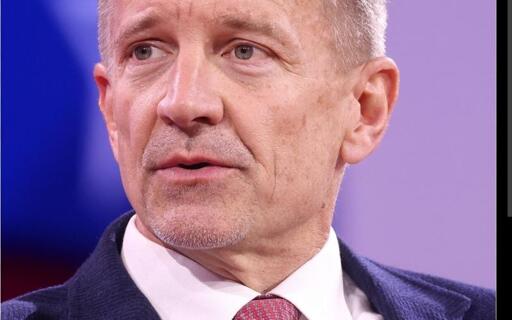
Erik Prince, a prominent Donald Trump supporter and head of a private security firm, announced his intention to keep his forces in Haiti for ten years as part of an agreement that will allow his company to participate in the country’s tax collection system.
In an interview with Reuters, Mr. Prince stated that his company, Vectus Global, had signed a ten-year agreement with the Haitian government to combat criminal gangs and establish a tax collection system. Once the security situation has stabilized, the company will help design and implement a program to tax imported goods at the border between Haiti and the Dominican Republic, he explained.
He said he hoped to regain control of major highways and territories from the gangs within about a year. “For me, one of the key indicators of success will be being able to travel from Port-au-Prince to Cap-Haïtien in a passenger car without being stopped by the gangs,” Prince said during the interview.
Prince declined to comment on the amount the Haitian government would pay to Vectus Global, or on the amount of taxes it plans to collect in Haiti.
The new president of the Transitional Council, Laurent Saint-Cyr, who took office on August 7 as part of a scheduled rotation of the council’s leadership, did not respond to requests for comment.
The council’s former president and Haiti’s prime minister also did not respond to requests for comment.
Vectus began operations in Haiti in March, primarily deploying drones in coordination with a task force led by the prime minister, but its long-term commitment and involvement in tax collection had not been previously reported.
A person familiar with the company’s operations in Haiti told Reuters that Vectus would step up its fight against the criminal gangs that control large swaths of Haiti in the coming weeks, deploying several hundred American, European, and Salvadoran fighters—trained as snipers and intelligence and communications specialists—as well as helicopters and boats.
Prince, a former U.S. Navy SEAL, founded the military security firm Blackwater in 1997. He sold the company in 2010 after Blackwater employees were convicted of the unlawful killing of 14 unarmed civilians while escorting a U.S. embassy convoy in Nisour Square in Baghdad. These men were pardoned by Trump during his first term in the White House.
Since Trump’s return to the White House, Prince has advised Ecuador on combating criminal gangs and has reached an agreement with the Democratic Republic of the Congo to secure and tax its mineral wealth. “It’s hard to imagine that they are operating without the Trump administration’s consent,” said Romain Le Cour Grandmaison, head of the Haiti program at the Geneva-based Global Initiative Against Transnational Organized Crime.
When asked about the allegations, a State Department spokesperson said the department had not hired either Prince or his company for work in Haiti.
A senior White House official stated, “The U.S. government has no involvement with the private military company hired by the Haitian government. We are not funding this contract and are not exercising any oversight.”
It is unclear whether Prince’s contract would be affected by the change in leadership in Haiti earlier this month.
In a televised address on August 7, Saint-Cyr expressed support for increased international assistance in the fight against gangs. “I call on all international partners to increase their support, send more troops, and provide more training,” he said. “Help us by strengthening the international force.”
The crisis in Haiti has worsened in recent years, with armed gangs gaining ground and attacking hospitals, police stations, and prisons, seizing control of strategic transportation routes, and extorting money from the population. Human rights groups accuse the gangs of massacres,removeds, kidnappings, and arson. About half the population suffers from food insecurity, and more than 8,000 people in displacement camps are facing starvation.
Haiti used to collect half of its tax revenue at the border with the Dominican Republic, but gang control of major transportation routes has paralyzed trade and reduced government revenue, according to a report commissioned last year by the Haitian government and several multilateral organizations. This has compromised the government’s ability to respond to the crisis or provide basic services, according to the report.
According to customs data, the Dominican Republic is a key source of grains, flour, milk, water, and other staple foods for Haiti. Haiti also relies on imports from the Dominican Republic for textiles, consumer goods, and medical supplies.
Security firms operating in Haiti have faced challenges in a country where there are close ties between gangs, local police, and certain factions of the government.
Earlier this year, a team from the U.S. security firm Studebaker Defense abandoned its mission in Haiti after two of its members were kidnapped, a incident likely attributable to police corruption, the New York Times reported.
Mounir Mahmalat, country coordinator for the World Bank’s Fragility, Conflict, and Violence Group, said it was virtually impossible to ensure the safety of goods in transit and of people working in Port-au-Prince.
Other security firms operating in Haiti have raised questions about Vectus’s ability to maintain control over gang-controlled territory, as well as the wisdom of channeling resources to private security firms rather than to national security forces.
“The use of private military companies cannot be considered a solution to insecurity in Haiti,” said Gédéon Jean, director of the Center for Analysis and Research on Human Rights in Haiti. “The use of private companies has often led to human rights violations.”
While a private force might help the police restore security, Jean cautioned against spending large sums on a foreign company when Haitian security forces lack funding and equipment.
It should be noted that in July, nine U.S. senators wrote to U.S. Secretary of State Marco Rubio and Secretary of Homeland Security Kristi Noem demanding detailed explanations regarding the involvement of a U.S. private military company in Haiti. According to them, a contract between the government and a company led by Erik Prince, the controversial founder of Blackwater Worldwide, raises serious concerns.
They raised the possibility of a violation of the Arms Export Control Act (AECA) and the International Traffic in Arms Regulations (ITAR), which prohibit any export of defense equipment or military services to a foreign entity without the express authorization of the State Department.
In light of these inconsistencies, the senators demanded specific answers by August 15, 2025. Among the six questions asked: Has a U.S. private military contractor applied for or obtained export licenses for defense articles or military services provided in Haiti? If so, please identify them and provide copies of the export licenses. ; Were these licenses reviewed under NSPM-10, Section 3(d), regarding risks to international peace and human rights? If so, please provide the results of that review. If not, why not? Has an interagency review assessed whether the activities of a U.S. private military contractor could compromise the Multinational Security Support (MSS) mission? If so, please provide the results of that review. If not, why not? Has the State Department assessed whether these activities are consistent with, duplicate, or conflict with the UN’s MSS mission? If so, please provide the results of that assessment. If not, why not? Other questions were also raised.
Christ… He’s getting to fulfill another war lord fantasy.