

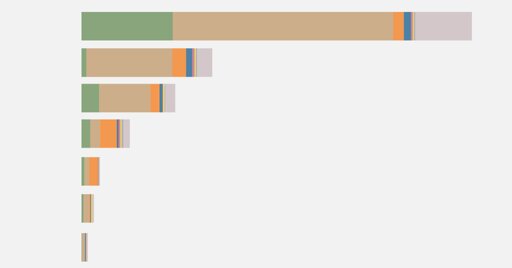
Food production is responsible for one-quarter of the world’s greenhouse gas emissions.
Eating locally would only have a significant impact if transport was responsible for a large share of food’s final carbon footprint. For most foods, this is not the case.
Greenhouse gas (GHG) emissions from transportation make up a very small amount of the emissions from food, and what you eat is far more important than where your food traveled from.
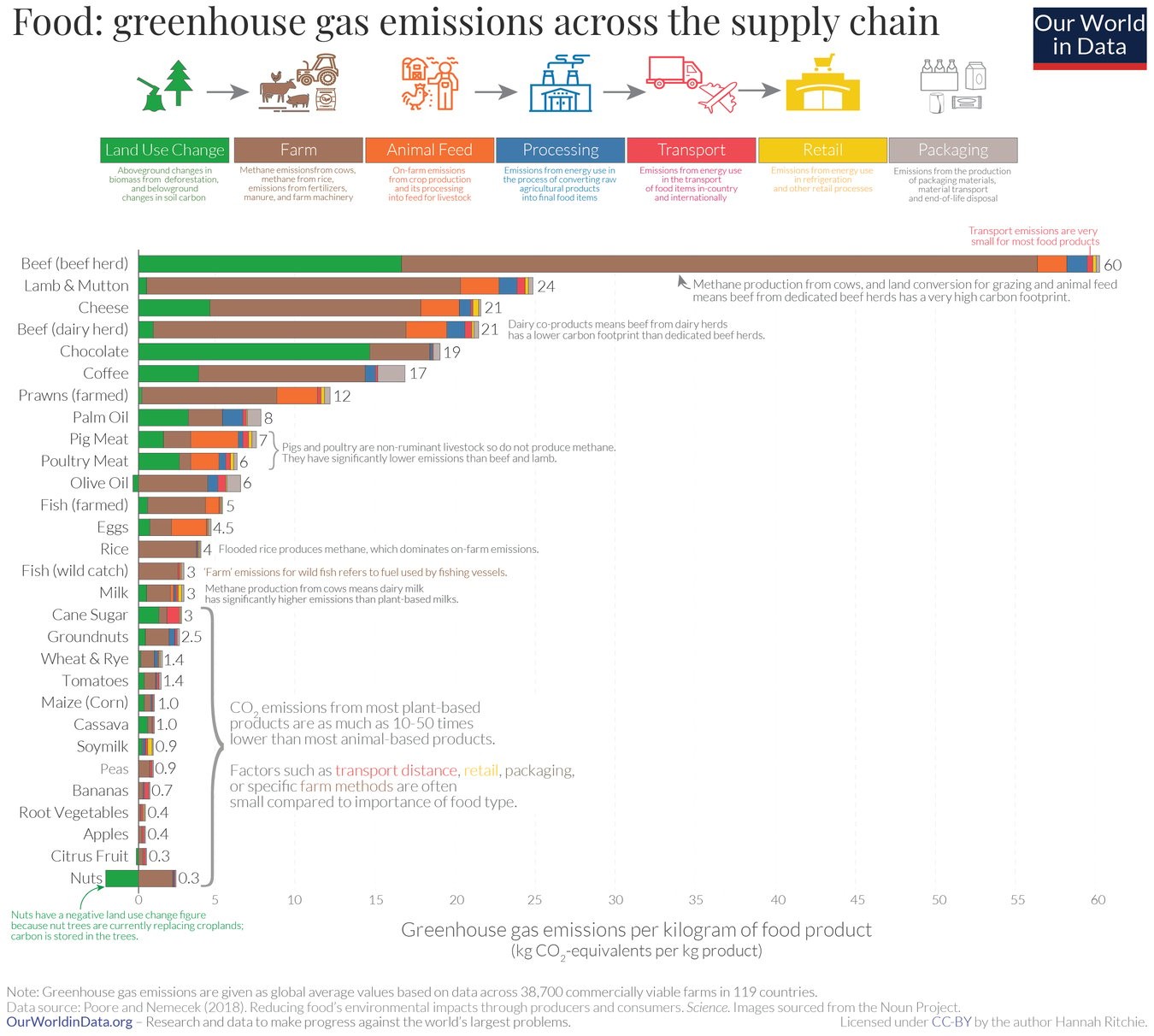
For most foods — and particularly the largest emitters — most GHG emissions result from land use change (shown in green) and from processes at the farm stage (brown). Farm-stage emissions include processes such as the application of fertilizers — both organic (“manure management”) and synthetic; and enteric fermentation (the production of methane in the stomachs of cattle). Combined, land use and farm-stage emissions account for more than 80% of the footprint for most foods.
Transport is a small contributor to emissions. For most food products, it accounts for less than 10%, and it’s much smaller for the largest GHG emitters. In beef from beef herds, it’s 0.5%.
Would beef-liver supplements (like in pill form) be enough iron to replace the beef?
They carry their own problems. I tried several iron supplements. Weirdly, a common side effect is excruciating back pain. Just eating unprocessed beef works best.