

Muad'Dibber
- 160 Posts
- 235 Comments


 4·4 months ago
The fact that you think communists advocate for violence for its own sake (because you think we’re all bloodthirsty or something), tells us you have no idea what communists views are.
This is an opportunity for you to learn from others, not close your ears because you’ve been inundated with a lifetime of anti-communist propaganda.
We should also be wary here tho, MLK did advocate for pacifism for all but the last few months of his life, and he received many a well-deserved roasting from revolutionaries like Malcolm X, and Kwame Ture.
Everyone should especially listen to Malcolm X - Message to the grassroots for a thorough critique of King’s nonviolent advocacy, and him being a sellout to petty-bourgeois white liberals for most of his career.
This is gone over in the most basic Marxist works, especially Engels - socialism utopian and scientific, and Lenin’s state and revolution. Here’s a good overview of it.
Here’s an excellent overview on why pacifism doesn’t work, and has never worked.
Red Phoenix - Pacifism - How to do the enemy’s job for them. Youtube Audiobook
Waze is unfortunately owned by google for many years now.
Devs, fight!


 42·7 months ago
Why is the biden regime cracking down on students protesting biden’s massive funding of palestinian genocide?
Someone please post this on lemmy.world, I want to see their reaction.

 30·7 months ago
We don’t do “debates” here, but if you’re genuinely interested in learning a perspective different from your own, we’d be glad to link some introductory resources.
This app is legit too: https://f-droid.org/packages/org.woheller69.whobird/

I could see him being more metal than his entire family.
This, but maybe slackware with the hannah montana ui.

Which one do you recommend?


Japanese teas are my jam lately: oolong, hojicha, genmaicha, matcha.
Mom, I want a bigger slice of the imperial pizza!
Only before you collaborate with anyone else. After that, don’t ever use rebase, or they’ll get an error, and will have to overwrite their local history with the one you’ve rewritten.

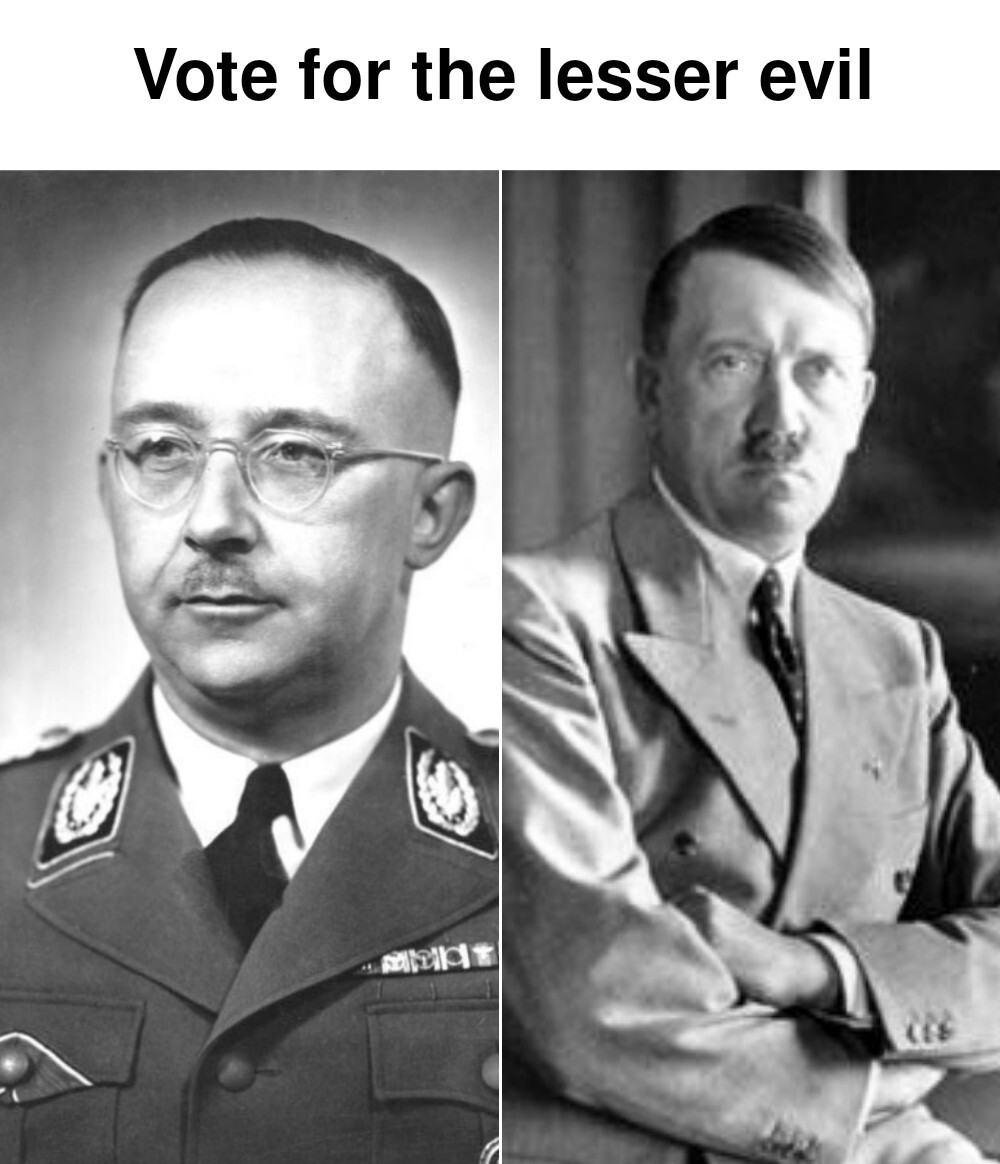
Elections in bourgeois democracy are nothing but political theatre, because ultimately capitalists stand above and control the political system to suit their interests. There is no don’t commit genocide, bomb countries, or exploit the global south option in any imperial core country, and if there is, they don’t last for long because of the hundreds of impediments to democracy (which the greeks properly saw as rule by the poor, not this sham popularity)
The ancient greeks knew this, and considered representative/election-based governments as nothing but sham popularity contests that serve the oligarchy. Aristotle even defined democracy as “rule by the poor”, and wouldn’t consider our liberal “democracies” as being democratic at all.
Communists have known this since the 1800s, but even modern liberal studies like the princeton one show, that voting has no effect on policy, and only dollar / wealthy interest groups matter.

















Bullying makes it seem like its happening only in a school playground, and doesn’t even hint at the amount of discrimination they face.
Trans ppl face high levels of sexual assault, hate crimes, exclusion from family, lack of support networks, economic hardship from not being able to get hired, medical discrimination, societal discrimination, and a whole lot more.