
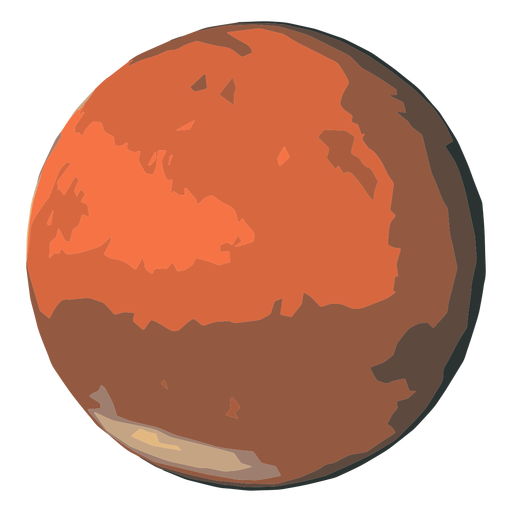
i just did some rough engineering/math to figure out how to build domes to live in. Assumption of course is inside pressure p = 0.2 bar.
- Assuming that you want to source as much construction material as possible on-site (In-Situ Resource Utilization), simple materials like Polyethylene might be advantageous to more complex materials like carbon nanofiber etc
- Polyethylene can be processed at temperatures around 200°C, while steel would have to be heated to 1500°C. Especially in the early days, plastics are clearly cheaper than steel. Let’s see whether we can get away with it:

A room-sized dome (i.e. sphere, but only the upper half, with sphere-radius r = 10 m, so maximum diameter d = 20 m if you cut at half height) with inside pressure p = 0.2 bar would require a thickness d = 6.66 cm roughly, if it’s made of PE. That does not sound undoable! In fact, that sounds entirely reasonable and doable.
There’s a third, less well-done page:

This is an RFC (Request For Comments). Leave your comments down below!
You don’t really want domes at all, except maybe as a place to do some agriculture.
Mars doesn’t have sufficient radiation shielding to protect people on the surface, and any amount of shielding adequate to block the radiation would make the dome extremely thick and heavy. Any Martian colonists would already be getting more radiation than they should just from necessary excursions and activities on or near the surface. (Not to mention the interplanetary space trip to get there, which is even worse for radiation exposure.) You wouldn’t want their living or working quarters to give them additional radiation exposure.
You also want to minimize the exposed surface area of pressurized compartments, because they could be vulnerable to meteorite damage and subsequent pressure loss, perhaps catastrophic pressure loss. The Martian atmosphere is thin and doesn’t provide as much meteor protection as Earth’s.
Even using domes for agriculture is questionable. The main reason you’d want a surface dome for this is to take advantage of ‘free’ sunlight energy for photosynthesis … but there are issues with that:
-
Mars is further away from the sun, so you’ll be getting less sunlight than most plants want. You may still need to supplement with grow lights.
-
Mars is cold. For all the energy you save from not needing to run grow lights, you’ll instead have to expend much more energy keeping the dome heated to a reasonable temperature where plants can grow well. The thin, transparent dome is sure to radiate heat at a very high rate, and you can’t insulate it very easily without blocking a significant portion of your already-limited sunlight.
Even for agriculture, you’re probably better off using grow lights in underground chambers that can be temperature controlled with less energy expenditure and are well-shielded from radiation and meteorites.
If you insist on having domes on the surface, maybe consider something more spherical instead. A spherical(ish) “bubble” shape could maintain its own shape just from the internal pressure and wouldn’t need such big, elaborate anchoring systems to prevent the pressure differential from blowing the roof off. The “bubble” can either rest directly on the ground surface (after smoothing, rounding, and preparing it) or it could be supported on pillars.
Look at real life pressure vessels on Earth: they’re almost always in a spherical shape or a cylinder with spherical ends. Because that’s by far the most efficient way to build a structure that needs to contain a pressure higher than its surroundings.
Also, if you want to run a fun and more practical experiment on this, it would be good to answer a question: what’s the lowest atmospheric pressure where plants can still grow and thrive? Agriculture domes don’t necessarily need to be held at full Earth atmospheric pressure. The lower you can get the pressure differential, the closer you can get the inside pressure to match the outside Martian atmosphere pressure, the cheaper and easier it will be to build a dome that contains that pressure. So how low can the pressure go while still being able to perform useful agriculture inside it?
This is an experiment you could run yourself with a vacuum pump and a large vacuum chamber.
1: Set up a miniature garden inside your vacuum chamber, complete with grow lights, temperature control, and a way to water the plants without opening the chamber or significantly changing the inside pressure, at least for long enough for the duration of the experiment. Prepare several samples of fresh soil, to make sure each experimental run uses the exact same type of soil, replacing with fresh soil after each test, to ensure no variable of soil degradation. You need to make sure your vacuum setup is able to maintain a vacuum over long periods, as well as maintain negative pressure against occasional leaks (leaks could be a good thing, in moderation – your plants need fresh air!)
2: Select a variety of fast-growing, useful plants, and collect seeds for each.
3: Start with a control run where you run the setup at full atmospheric pressure. Record the results – how fast the plants grow, how large the plants grow, etc.
4: Repeat the experiment over and over again at lower pressures. 90% atmospheric pressure, 80%, 70%, 60%, etc, etc. Until you find a pressure at which the plants aren’t able to grow at all. And, of course, record the same results each time.
5: Analyze the data. Chart out graphs of plant growth vs. pressure. Hopefully, you’d be able to identify a drop-off point, above which the lower pressure doesn’t affect the plants much, but below which growth is slowed or stopped entirely. If you find such a point, you know that’s the pressure you’d want to run a hypothetical Martian agriculture dome at.
the thing with the radiation is a rumor. low-dose long-time radiation exposure is less harmful than the same dose of radiation in a short time frame. consider how drinking 10 L of alcohol in a day would surely kill you, but drinking the same amount over 10 years would barely be noticeable (that’s one small beer each weekend).
check out the article Linear no-threshold model for a discussion of this. while for high radiation doses, cancer risk linearly increases with dosage, for lower doses that is much less clear. Check out this article about splitting up doses to reduce damages for example, or Radiation hormesis for a list of studies of long-term low-level radiation incidents.
Notably mars has about 30x the background radiation compared to earth (source: NASA and this XKCD chart). Meanwhile the Kerala study from here (where people on average get 80x the normal background radiation) show no elevated cancer rates.
Eh… It’s still definitely not good for you.
yeah there’s too little data to actually conclude on the health effects for now. we’ll probably know more in 100 years (at the latest). anyways, point is that it doesn’t kill you with a 90% chance or sth, and probably all things considered my guess is that the risk is probably small enough to justify building the houses on the surface directly.
but yeah, we’ll see.
-

