I mean just that. Rows of solar panels on flat roofs or ground mounts are spaced just far enough apart that when beam illumination hits them that there are normally no shade from one row to the next… but that assumes that the light is coming from a well-known band of locations in the sky where the sun is. Strong differences in illumination cause PV to work as well as the lowest irradiance level, and in the case of beam-reflected irradiance from a rapidly moving source location that won’t be restricted to “where the sun usually is” and because there will basically be no significant diffuse irradiance from the satellite mirrors the arrays will frequently be suffering from unexpected shade which will make them terrible at converting the reflected light.


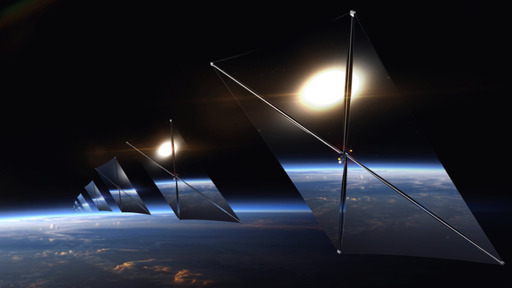
I mean just that. Rows of solar panels on flat roofs or ground mounts are spaced just far enough apart that when beam illumination hits them that there are normally no shade from one row to the next… but that assumes that the light is coming from a well-known band of locations in the sky where the sun is. Strong differences in illumination cause PV to work as well as the lowest irradiance level, and in the case of beam-reflected irradiance from a rapidly moving source location that won’t be restricted to “where the sun usually is” and because there will basically be no significant diffuse irradiance from the satellite mirrors the arrays will frequently be suffering from unexpected shade which will make them terrible at converting the reflected light.